
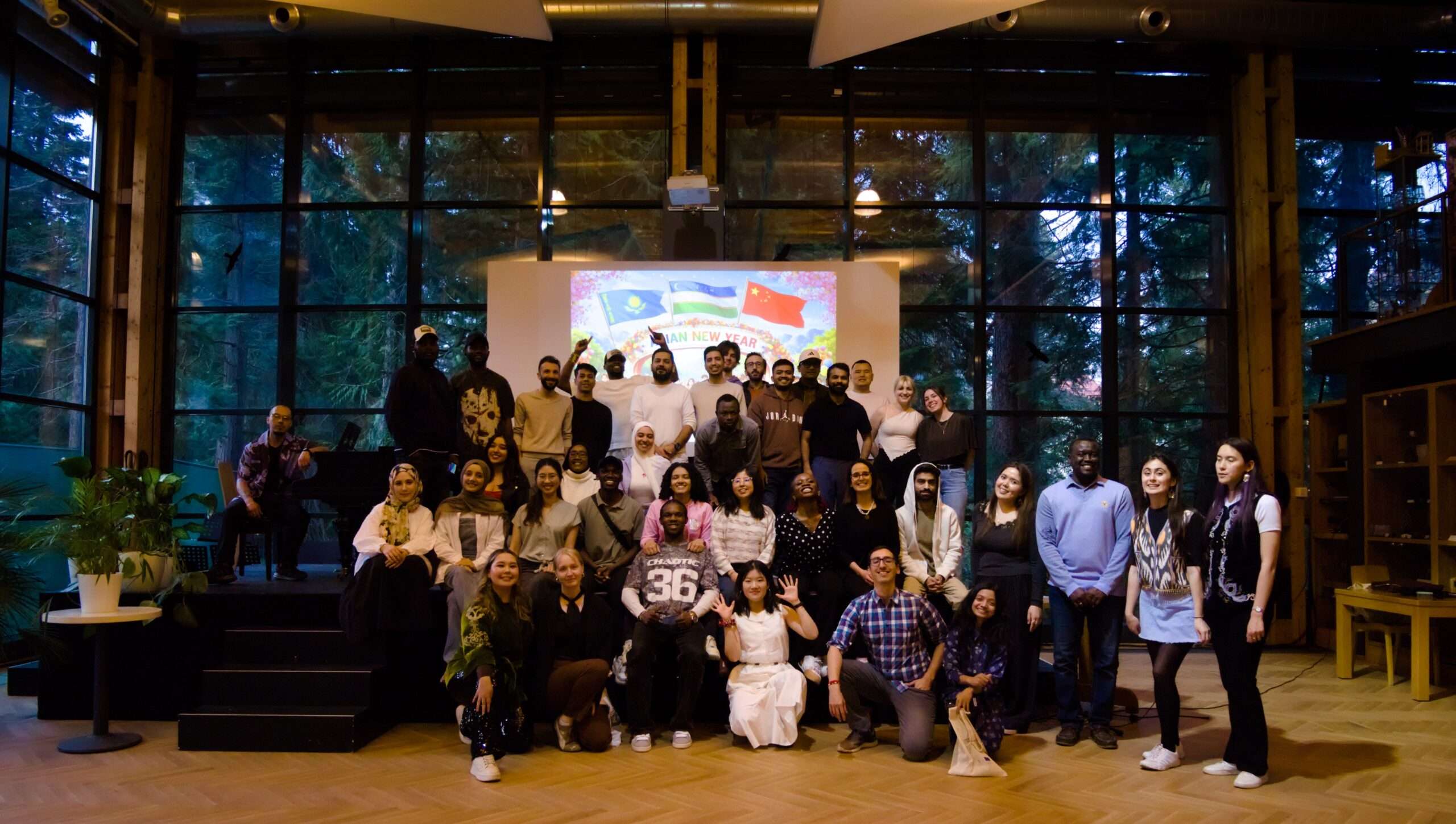

Cover: Group photo by Márton Halma
Kazakh Dishes and Dances
Starting with Kazakhstan, we first listened to a presentation that detailed traditions. What symbolizes what? What spiritual value does it have? What do people do and eat on this occasion?
Afterwards, an exciting Kahoot quiz tested our knowledge from the presentation. Everyone participated enthusiastically, competing for the win. At the end, we watched several videos, and to truly experience Kazakhstan, we learned a simple traditional dance. The dance consisted of moving your shoulders up and down to the rhythm, then directing your arms in a snake-like motion. This was combined with a slow forward and then backward tilt. The dance also required standing in pairs so this sequence of movements could be done towards each other.
It was wonderful to see everyone joining in, laughing, and having fun. As a surprise, we could taste a traditional dish: the baursak. Baursak is a delicious, puffy fried bread served on special occasions all over Kazakhstan. This special bread is served during important events, such as weddings or memorials.

The Importance of Family in Uzbekistan
The next country we got introduced to was Uzbekistan. At first glance, Uzbekistan and Kazakhstan look very similar, but they are different. They have different food, symbolism, traditions, and dances. While the Uzbek people share some similarities with other Asian countries, they still have their own unique identity. Family is important too: it looks like the Uzbek New Year is really about generations and the meaning of family.
As the presentation ended, we once again danced, but this time in an Uzbek way. The dance was simple but very fun. It felt like a bit of a workout. This dance is usually danced by men, not women. Why, of course, we all did it for fun; anyone could join.

Chinese Culture and Its Zodiac
Last but not least, we could learn about China and its traditions. Why the moon is important, what the colour red symbolises, and what the special, outstanding traditions are, you might never see anywhere else.
Without question, this is one of the most well-known and popular cultures from the trio. The whole world is celebrating the year of the horse. Even Chenyu, who got to present Chinese culture, was born in the year of the horse. So this means it is her year; in tradition, she has to wear something red every day. It can be big or small, but one part of the outfit needs to be red, symbolizing good fortune and luck.
Instead of learning a dance, Chenyu introduced us to a lovely Chinese rhyme she herself sang. Her voice was gentle and calm. This song taught children about the 12 zodiac animals. Each animal has its number and year; they repeat after the 12-year cycle, so it’s easy to figure out which is your year.

The Fun of Friendly Competition.
Towards the end, we listened to Ezoza and Yelizaveta play on the piano. One last game was played to close off the event perfectly: the Jeopardy game. There were questions about all 3 nations and their New Year traditions. Of course, there was also a small but more significant prize: the winners got to take home a large package of chocolates.
The organizers wore traditional clothes and accessories: from a pretty earring to a stunning shirt, even red socks with horses. They shared the story behind each item. Why are they special? What does it mean, and is it part of tradition? Ezoza and Aida shared a pair of earrings. It was a gift and a symbol of their friendship.
Our team managed to get a short interview with the organizers. We asked them about the event, whether they were a bit nervous, and whether they had a great time. Was it to talk about and share their culture? Overall, they said it was heartwarming to see that so many different cultures came together, having fun, dancing, and chatting. We can agree on sharing a great time together, and all of us are grateful to have had a chance to take part in such a great event.