

Cover photo: Jonathan Olley
Practical tools and craftsmanship most definitely contributed to the success of Chloé Zhao’s Hamnet (2026), Guillermo del Toro’s Frankenstein (2025), or Project Hail Mary (2026), just to mention a few films that preferred physical, human-made sets instead of computer-generated ones. The most significant aspect of using practical effects is that scenery and visuals once again play an active role in storytelling, rather than merely providing a space for the action. So, let’s take a look at how these directors make use of authentic craftsmanship considering overall production design.
The Hidden Meaning in the Colours of Frankenstein
At the end of 2025, the Monster of Mary Shelley’s classic tale was once again “reanimated” on film by Guillermo del Toro. This version, unlike the black-and-white 1940s adaptation, puts heavy emphasis on the colours, which are assigned to characters, environments, and even to help divide the story into smaller chapters. Even though the name ‘Frankenstein’ conjures up the image of the famous black-and-white monster in everybody’s mind, Guillermo del Toro gives new life to the more than 200-year-old tale with the film’s vivid colours and stunning visuals.
According to Guillermo del Toro, every scene in the movie can be viewed as a painting in itself, so the colours shown in a particular scene become inherently significant. The film works with very symbolic colours such as red, green, white, and gold. As the characters appear in the film, they usually embody the colours assigned to them: Victor is red, Elizabeth is green, and the Creature has both earthy and golden hues, as well as white in terms of his bandages and skin. The opening and closing scenes feature white, due to the Arctic location of the story, which frames the narrative into a circular developmental curve. At the end, the story goes back to where it started and signals its return with the snow-covered, white landscape.
The following episodes of the story, such as Victor’s childhood and his years of scientific experimentation, feature red as their primary colour. His mother’s death and his prophetic dream of the archangel both use the bloodlike shade of deep red, which later on only appears with Victor himself, as it foreshadows the methods of his bloody creation process. Even though Victor is past these events, he carries the colour with him in the form of his glove, which gives the impression of him being “bloody-handed” all the time. Red also appears in his surroundings, like in the sheets, curtains, the furniture of his bedroom, and in the details of Elizabeth’s costumes, as Victor is kind of searching for his mother in her.
When Elizabeth appears in the movie, she is the only one who adds green to the colour palette. It signals that she is connected to nature, life, and introduces her passion for biology and science, which contrasts with Victor’s bloody scientific ambitions at the same time. She is more connected to the Creature because she is more interested in the science of life rather than death, unlike Victor. This contrast is also shown in the laboratory where the huge standing batteries are red when they are turned on, but green when they are not operating.
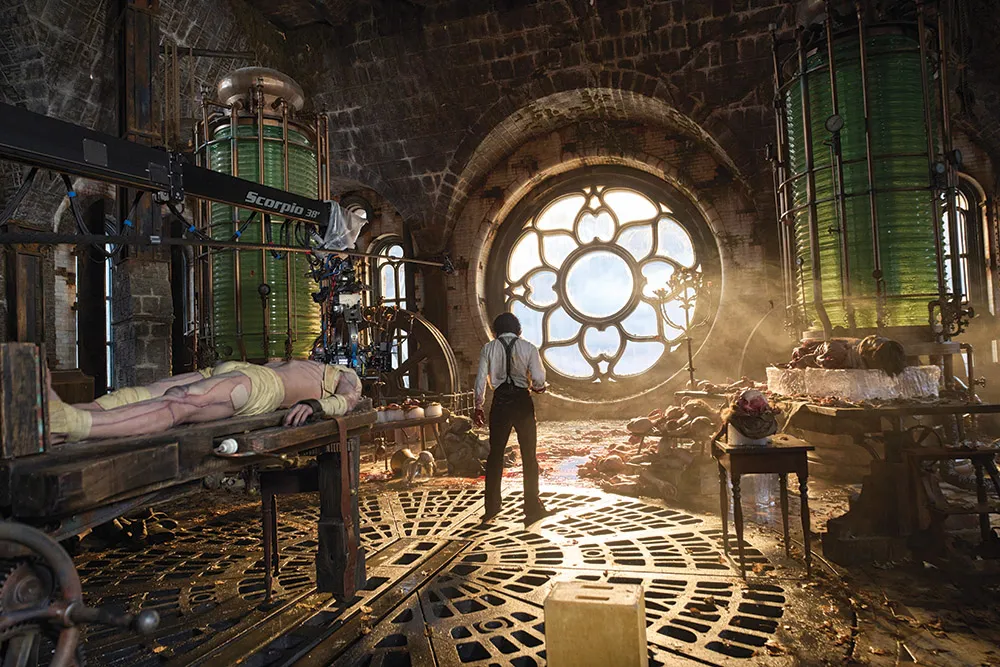
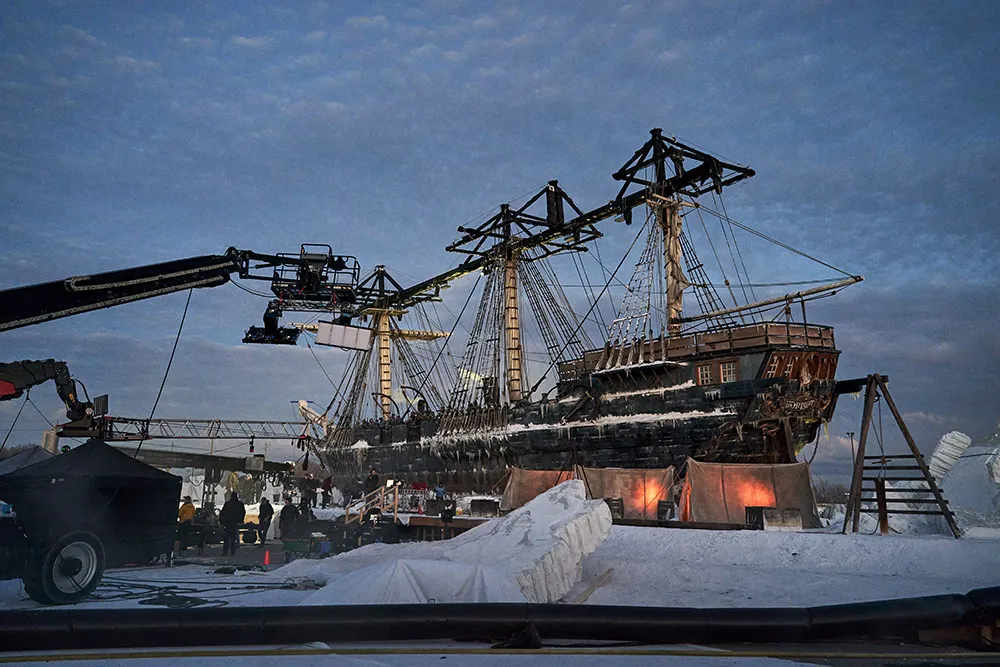
The colour motifs are very important in Frankenstein to help the audience feel not just for the characters, but also to bring out an emotive reaction to important scenes, so the whole movie could feel real as we are watching it. To further emphasise this “realness” of the film, Guillermo del Toro and the production team aimed to build as many sets, props, and mechanics as they could. For example, the life-sized ship, which appears at the beginning and at the end, is a built prop, and both its interior and exterior are carefully crafted to resemble an authentic sailing ship. Another notable scene takes place in the sewer, where Elizabeth and the Creature first meet, in which the arches, the sound of the chains, and the metal pipes coloured with rust are all real, handmade props.
History and Nature as a Setting in Hamnet
Another major production that came out this year is Hamnet, directed by Chloé Zhao, which takes the story written by Maggie O’Farrell to real historical locations of Elizabethan England. The love of Agnes, played by Jessie Buckley, and Will, played by Paul Mescal, starts in the woods close to the cottage of Agnes’ family. These scenes were shot in the Lydney Park Estate in Gloucestershire. The treehole, where the viewer first sees Agnes, is a real product of the Park’s trees, says Fiona Crombie, the production designer, and to make the roots truly “embrace” Agnes, the production team added a few extra ones to create this “protecting” gesture of nature which follows Jessie Buckley’s character throughout the whole movie.
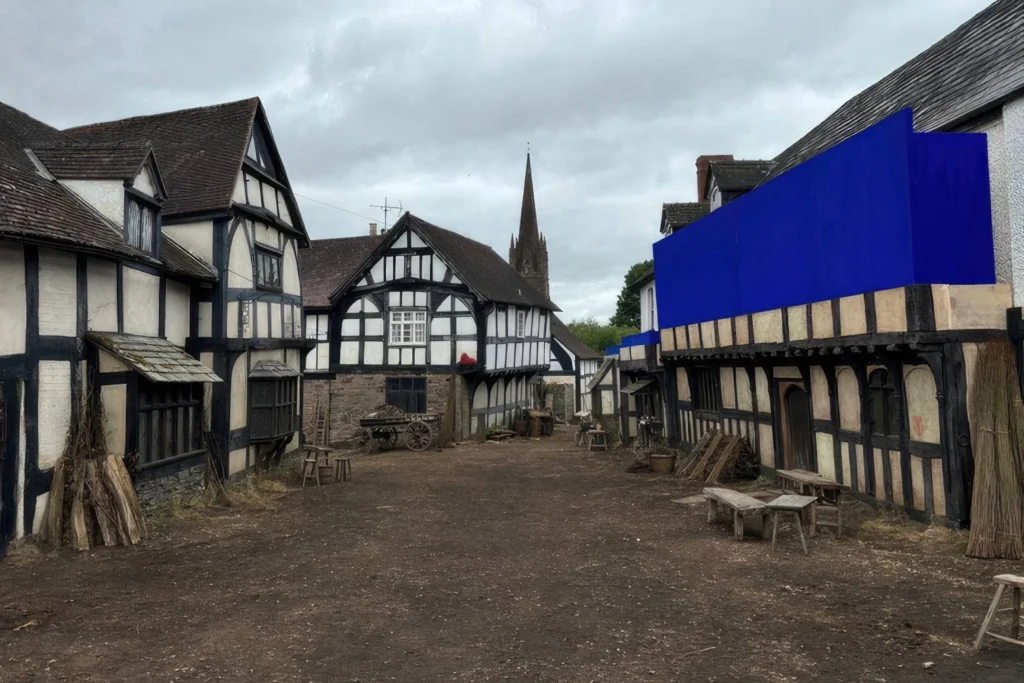
The production team also visited Anne Hathaway’s cottage as well, but they decided against using it due to its certain modern characteristics. Instead, they chose to shoot the film in the village of Weobley, where the white, timber-framed houses provided a perfect location to evoke the Tudor period. They built additional facades, painted the already existing houses, and covered the streets with dirt and mud to recreate the historically accurate sight of a 16th-century English village.
The country farmhouse, which provided the home for Agnes and Will’s family, was a real farmhouse built in the early 1600s, called the Cwmmau farmhouse in Herefordshire. Crombie’s team, however, made changes to the exterior and the interior as well. They added hand-crafted props like leather clothes, everyday kitchen objects, and hand-painted panels near the staircase. The windows with the bars, which can be seen in various scenes, were also crafted by the team, and they even made a garden for the house to grow their own herbs and vegetables to use in the film.
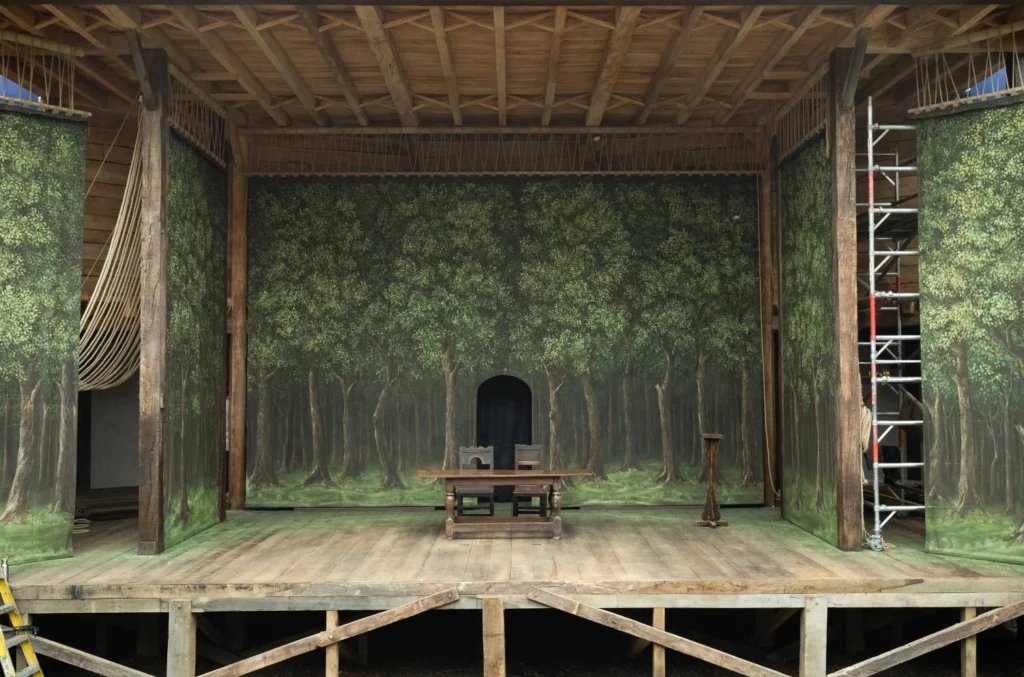
The Globe Theater was also rebuilt for the film’s climactic scene where Will finally finished his play, so Agnes can see it acted out on stage. Director Chloé Zhao wanted these scenes to be more intimate, resulting in Fiona Crombie and her team building a replica of the theater on a smaller scale to emphasise the closeness of the people sharing the grief and love towards Hamlet, whose character was inspired by Agnes and Will’s son Hamnet. The most interesting addition to the Theater was the hand-painted backdrop, which evoked the deep forest where the love of Will and Agnes first came to be. This woodland scenery signals the beginning, where everything started for them, but in the end, it can only act as the mere background of their life story and as a painted replica of their intimate meeting ground.
“Building” Outer Space in Project Hail Mary
Science fiction and fantasy films pioneered many production design techniques, which are still used in filmmaking today. One obvious example is the first Star Wars trilogy with its painted canvases depicting outer space, landscapes of various other planets, and the interior of spaceships. Another is Alien from 1979, where the various stages of the Xenomorph were brought to life using puppets, latex suits, and several mechanical parts on the iconic head of its last stage.
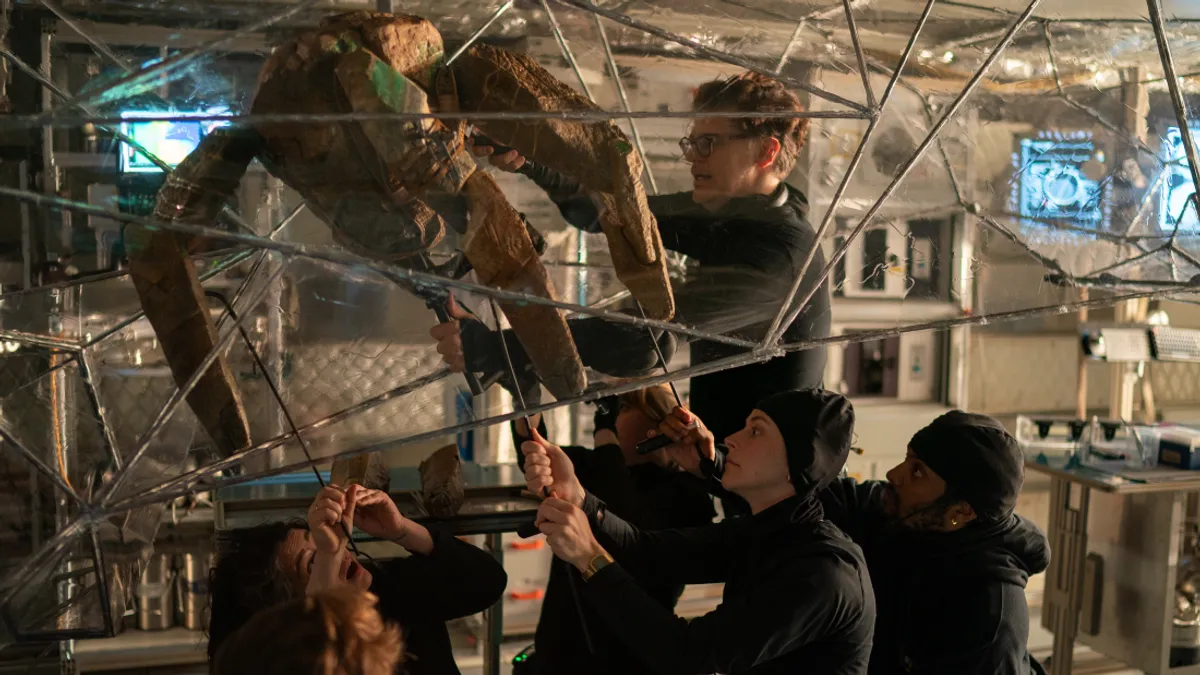
Co-directors Christopher Miller and Phil Lord used such techniques, and even more in the creation of their recent film, Project Hail Mary. The most surprising element of the movie is that Rocky, the alien creature who befriends Ryland Grace (played by Ryan Gosling) upon the realization of their shared mission, is not CGI. He is actually a life-sized puppet operated by 6 puppeteers, which was built by the creature effects team led by Neal Scanlan. According to the directors, Rocky needed a physical body to convince the audience that he is not just real but also capable of forming real friendships and showing real feelings, so Scanlan and his team gave Rocky all the details he needed to come to life. They gave him several different markings and tattoos which told the story of his culture and planet. Such details substituted for the different costumes humans usually have in movies to indicate background, qualities, and character.
Apart from creating his body, Rocky gets a human voice as well. In the movie, Grace chooses the voice for the little alien from a wide range of prerecorded samples on a computer, which turns out to be a fairly long process. In reality, it was way faster because the perfect voice actor for the job was already on set: James Ortiz, the lead puppeteer. The creators believed that Ortiz embodied the character’s personality so well that he needed to give Rocky his voice too.
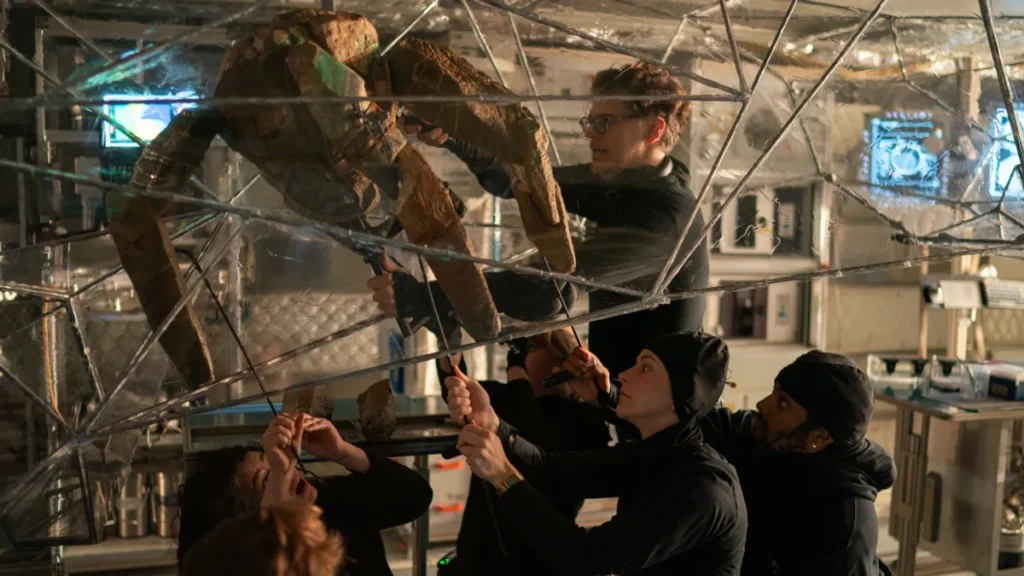
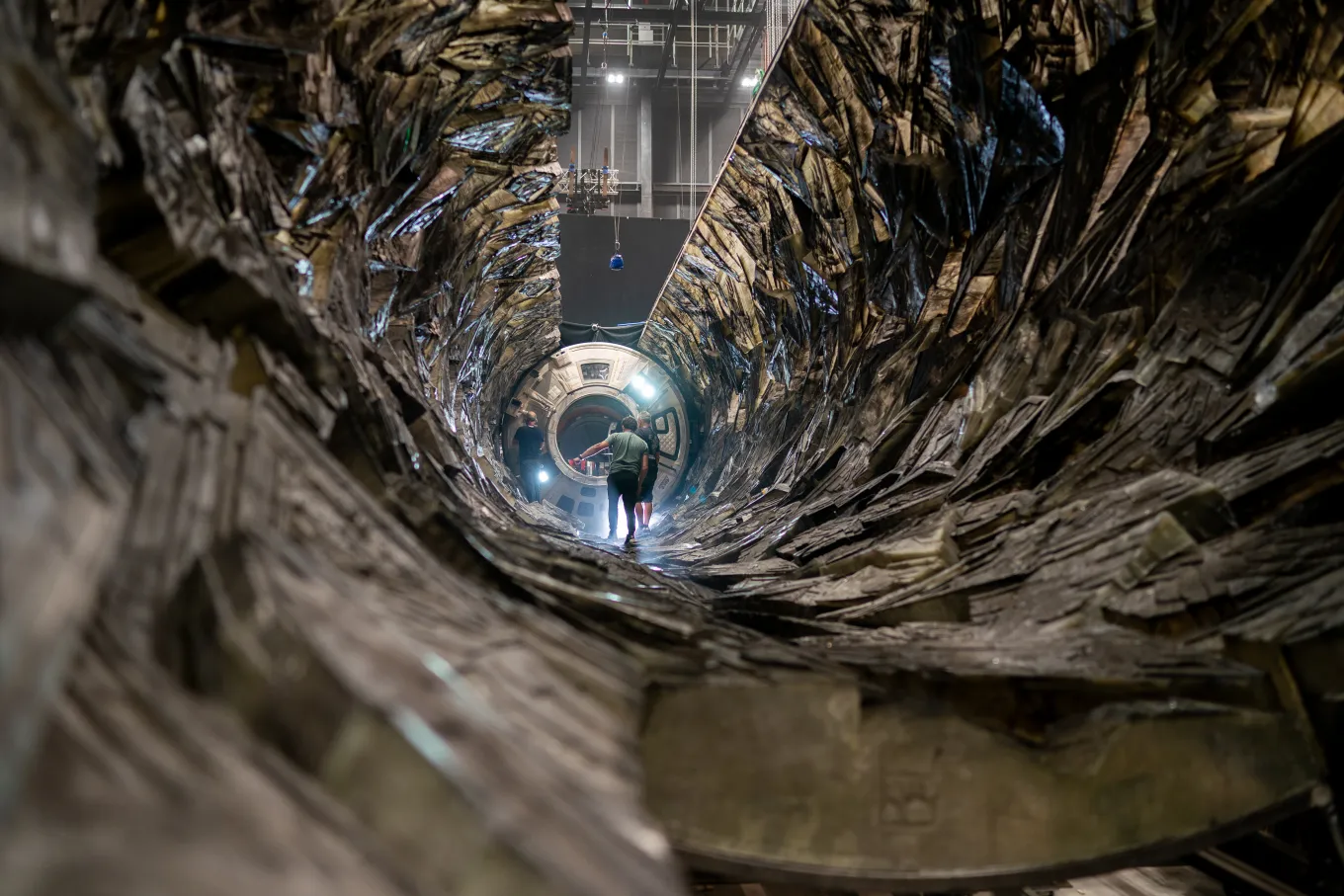
Another mind-blowing detail is that the interior of the tunnel between the two spaceships and the Hail Mary itself was built by the production design team led by Charles Wood who started with meticulous research of real-life spaceships and the International Space Station. They started with building smaller-scale models so they could add as much detail to the sets as to make them truly believable. The equipment, which can be seen in the cockpit of the Hail Mary, was designed to look like a real and functional operational panel, so the team installed computer screens with different shades of black to imitate how they might have been obtained from different manufacturers when the ship was built in the movie. They also added buttons and switches with labels in different languages to emphasise how humanity has to come together to save Earth.
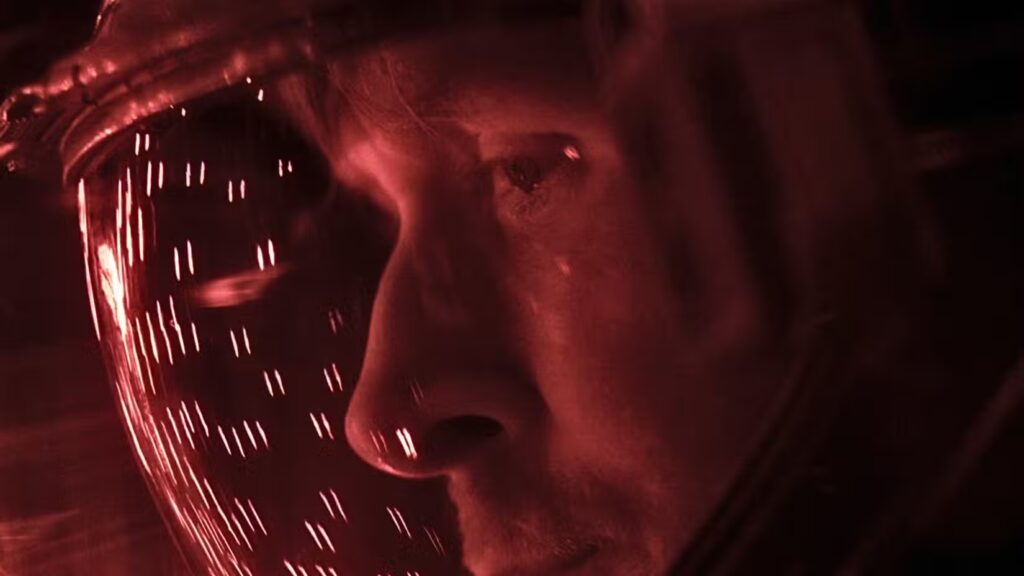
Another peculiarity of this film was that zero green screens were used, even for the scenes that take place in outer space. In the iconic scene where Ryan Gosling’s character goes outside to inspect the Petrova line and the astrophage, the creators used a practical trick instead of generating this environment on a computer. They modified two Alexa 65 cameras by removing their infrared filters so the sensors could see light that is invisible to the human eye. Although the wider shots were made through VFX, they used these cameras to shoot the close-up scenes of Gosling’s helmet while he was in a chicken wire cage equipped with tiny infrared LEDs, resulting in this pinkish, out-of-focus, almost sparkling atmosphere where Grace is surrounded by astrophage.
These films are great examples of how creators favour authentic artistry and practical effects when it comes to moviemaking. It is important to note, though, that CGI and VFX are integral parts of this process too, because they can take the world and the atmosphere created by the art departments one step further to make a scene more spectacular. However, without the craftsmanship and skills of the people who build sets and props, or design costumes and figure out the cinematography, CGI could easily come off as cheap and lazy.
Concluding Thoughts
The way these directors put heavy emphasis on the practical effects and physical aspects of filmmaking was a definite reaction against the overuse of CGI, which had become popular in recent years. It also shows the anti-AI view of many notable directors such as Guillermo del Toro, who claims that art is inherently human-made, and tangible props and sets, designed with authentic crafting skills, will always be superior to using only digitally created imagery. According to the director of Frankenstein, VFX could only exist authentically where physically built sets had reached their limit.
Moreover, it seems that the number of directors who favour this kind of physicality in filmmaking is rapidly growing. For example, in recent horror movies like Backrooms (2026), Resident Evil (2026), and Obsession (2026), eerie handmade sets, bloody practical effects, and haunting SFX makeup were the key elements, which made these productions box-office successes. So, we can see a clear tendency, not just of the creators, but of the audience as well, to appreciate this “tangible” way of movie creation.
The filmmakers mentioned above proved that physical sets, carefully designed costumes, and even puppets are the key to an awe-inspiring cinematic production. After all, movies are created to make us feel something, and without the “human touch”, is it even possible to feel anything?